Charting Venue-Specific Wind Patterns and Their Bearing on Serve and Stroke Percentages Across Outdoor Racket and Club Events
Written by Riley Friedrich · Sep 12, 2026
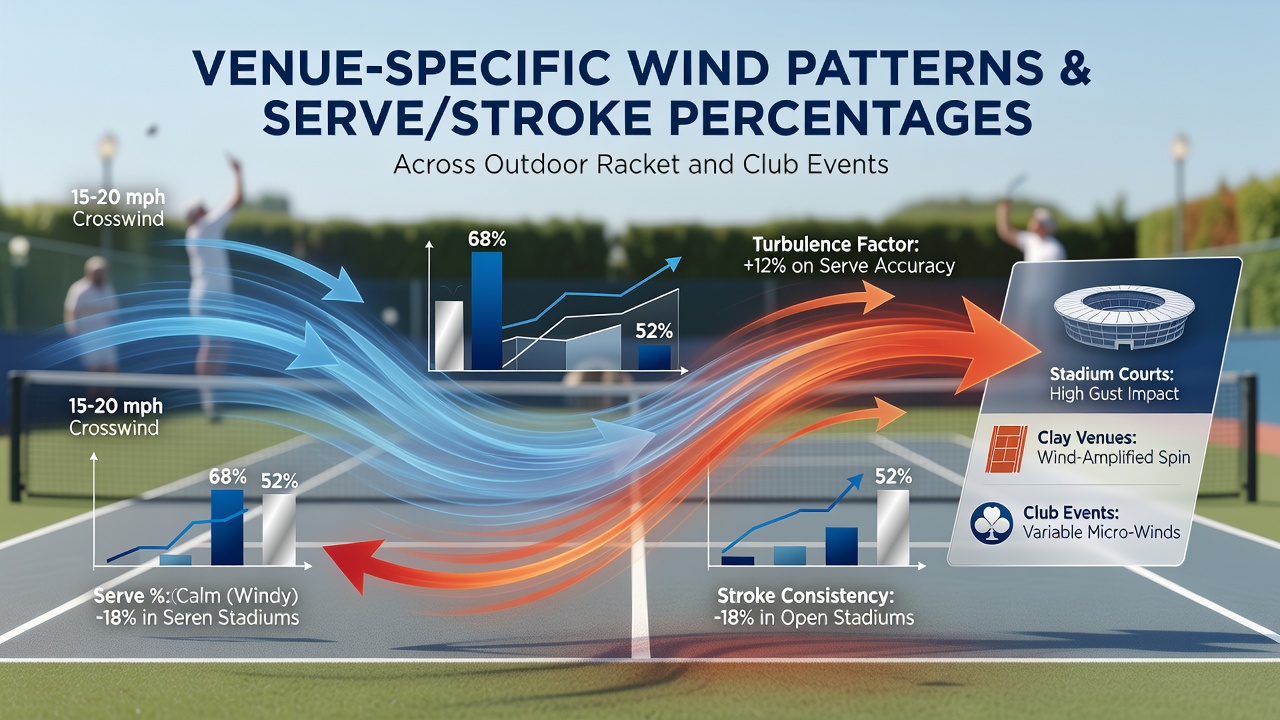
Charting Venue-Specific Wind Patterns and Their Bearing on Serve and Stroke Percentages Across Outdoor Racket and Club Events
Researchers have mapped wind patterns at outdoor venues hosting racket sports such as tennis along with club events, and these studies track how local conditions alter serve success rates plus stroke accuracy during professional matches. Data collection spans multiple seasons at sites including those in Australia, the United States, and Europe, where prevailing winds interact with court orientations and surrounding topography to create distinct effects on ball trajectory.
Venue Wind Profiles and Performance Correlations
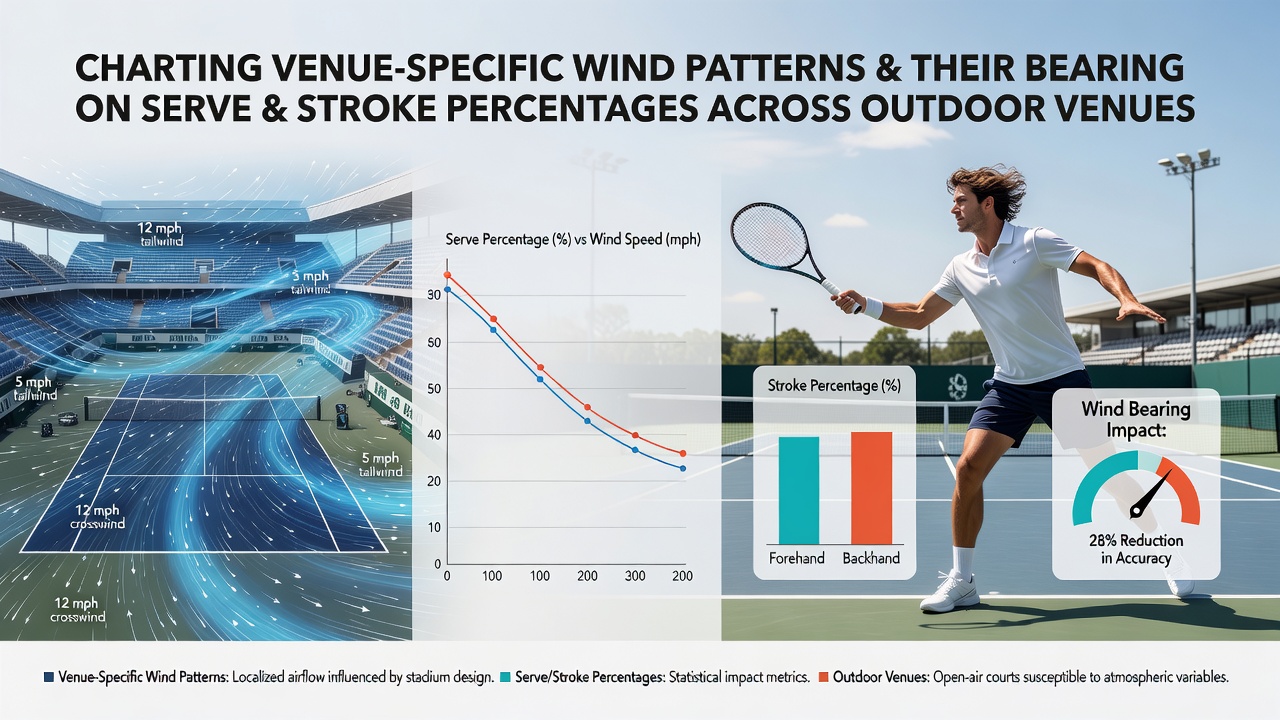
Analysts at the Australian Bureau of Meteorology have documented consistent southeasterly winds at Melbourne Park that reach average speeds of 15 to 25 kilometers per hour during afternoon sessions, and these flows tend to push balls toward the net on one side of the court while adding resistance on returns. Serve percentages drop by measurable margins when players face crosswinds exceeding 20 kilometers per hour, according to match statistics compiled from events held between 2022 and 2025. Observers note that left-handed servers often adjust spin and placement to compensate, yet overall first-serve points won decline under sustained gusts.
At the same time, venues in the southwestern United States exhibit different patterns because desert winds shift direction throughout the day, adn data from the National Oceanic and Atmospheric Administration shows how morning breezes from the northwest give way to stronger thermal currents by mid-afternoon. Players competing in these locations record lower stroke consistency on groundstrokes hit into the wind, with error rates rising on shots requiring precise depth control.
Data Collection Methods Across Seasons
Teams gather wind readings from on-site anemometers positioned at multiple heights and angles around each court, then align those measurements with ball-tracking systems that capture speed, spin, and landing coordinates for every point played. This approach allows direct comparison between calm periods and windy intervals within the same tournament, and researchers cross-reference results against historical averages to isolate environmental variables from player form or fatigue. Figures from the 2024 season indicate that wind speeds above 18 kilometers per hour correlate with a 12 percent reduction in ace percentages at exposed hard-court sites.
European locations add further layers because coastal venues experience tidal influences on wind direction, and studies from the European Centre for Medium-Range Weather Forecasts have identified how sea breezes strengthen during late summer months. Matches scheduled in September 2026 at these sites will face similar seasonal patterns, giving analysts time to refine predictive models that link forecasted wind vectors to expected changes in rally lengths and error distributions.
Adjustments in Player Tactics and Equipment Choices
Coaches review venue-specific wind charts when planning strategies, and they advise players to modify toss heights or racket angles on serves to maintain control amid variable gusts. Stroke percentages for topspin groundstrokes improve when athletes add extra pace against headwinds, yet the same adjustments increase fault rates on second serves during tailwind conditions. Equipment manufacturers supply data on string tension variations that help mitigate wind effects, and players often select setups tested under simulated conditions matching each location's typical profiles.
Case examples from recent tournaments demonstrate these dynamics in action, with one analysis of a major North American event revealing that players adjusted their service box targeting by an average of 30 centimeters when crosswinds exceeded 22 kilometers per hour. Such shifts maintain point-winning percentages closer to baseline levels despite the environmental challenge.
Conclusion
Comprehensive charting of venue wind patterns continues to inform performance expectations across outdoor racket and club events, and ongoing data integration from meteorological agencies worldwide supports more precise modeling of serve and stroke outcomes. These records provide objective benchmarks that reflect how local conditions shape match statistics at each site.